What Is a Master Carton? A Packing Guide for China Imports
Compare two ways to pack the same 1,200-unit order, then send your factory and warehouse a packing specification they can both use.
What Is a Master Carton Used For?
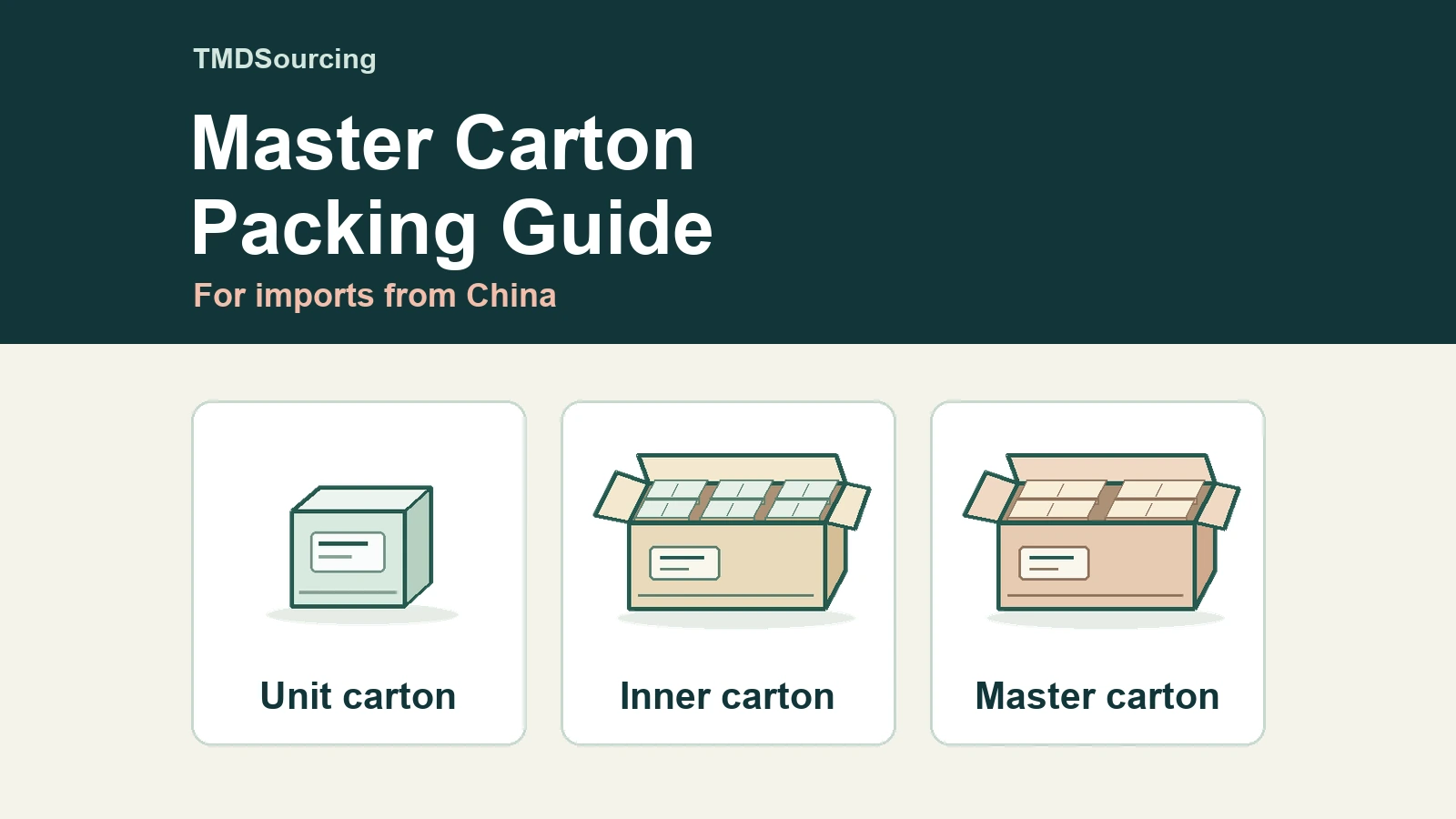
A master carton is an outer shipping box that groups multiple units for transport, storage and warehouse receiving. The goods can go directly into it as individually packed units or be grouped in smaller inner cartons first.
When a factory quotes 24 pieces per carton, confirm which SKU it means, how those pieces are arranged inside the box and what the sealed carton measures and weighs. Record the approved configuration so the factory, inspector and receiving warehouse can all check the same quantities.
Master Carton vs Inner Carton vs Unit Carton
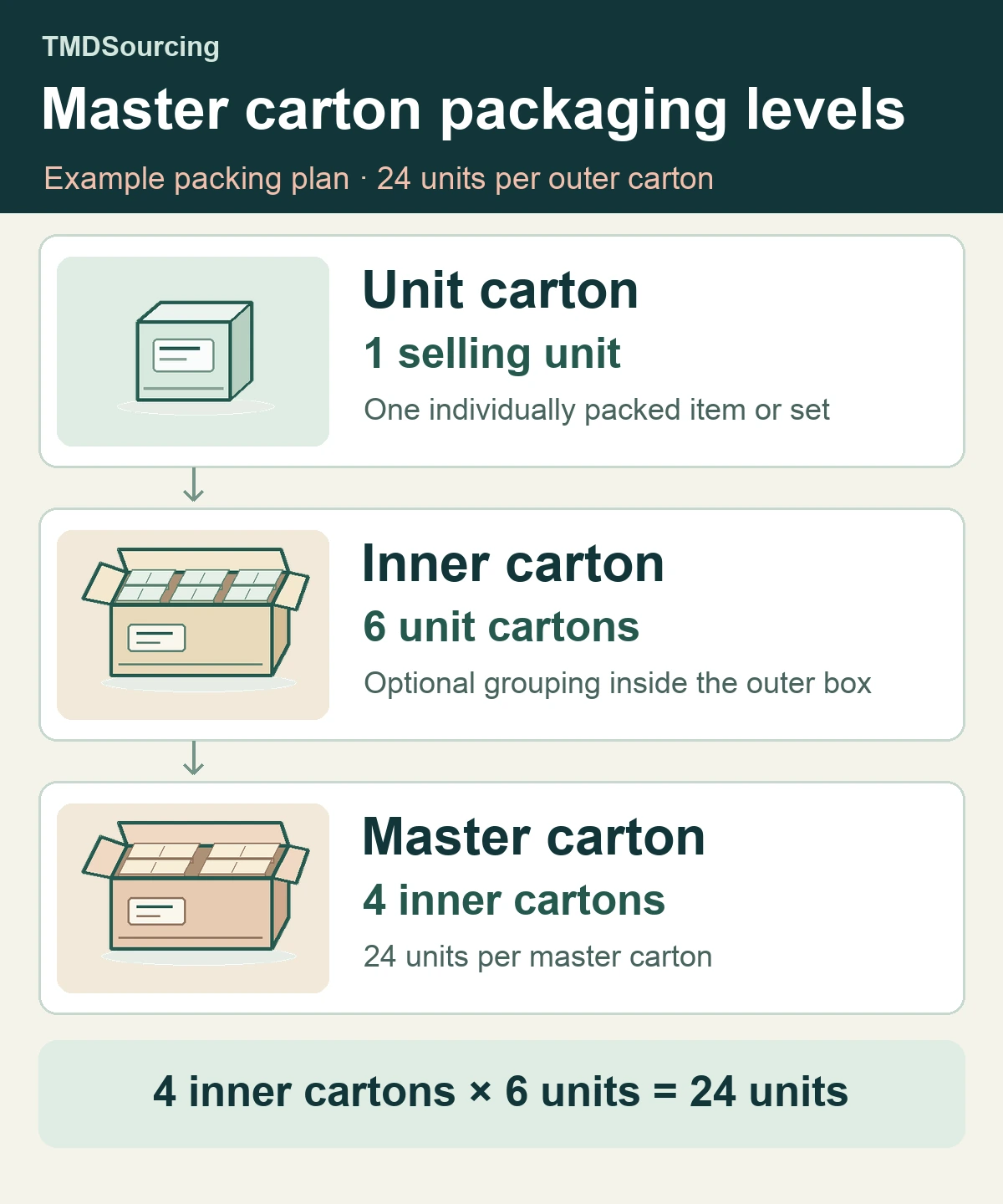
- Unit carton. The individual box for one selling unit. A factory might also refer to it as the unit box or retail box. The selling unit can itself be a set, so use the SKU to specify what counts as one unit.
- Inner carton. An optional box that groups units inside the master carton. For example, a wholesaler who picks six units at a time can receive them in a six-unit inner carton.
- Master carton. The outer box that travels through bulk handling. In the example below, four inner cartons of six units give you 24 units in one master carton.
Buyers and suppliers may use outer carton, master case or shipping case for the same box. Specify the contents at each level when you ask for a quote. A warehouse may pick by inner carton while a forwarder counts master cartons, so give both teams the counts and the packaging levels they refer to. GS1’s packaging hierarchy includes cases that hold individual units directly and cases that hold inner packs. GS1 packaging levels
How Many Units Should Go in a Master Carton?
Start with how the goods will be received and picked. A wholesale buyer may request sealed inner cartons in its usual ordering quantity. A fulfillment warehouse may open cartons and pick individual units. Ask whether the receiver sets limits for outer dimensions or gross weight and whether it accepts mixed or partially filled cartons.
Have the factory propose a packing arrangement for the actual packaged product. Allow room for the protection it needs, then check whether workers can lift and stack the resulting carton as required. If your receiver handles only palletized loads, check the carton footprint against its pallet sizes, height limits and overhang rules.
Units per full master carton = units per inner carton × inner cartons per master carton. For units packed directly into the outer carton, record the actual count of units in each full carton.
Agree how the factory will pack any remainder. With 24 units per full carton, an order of 1,212 units gives 50 full cartons and one partial carton of 12 units. List that carton separately with its actual contents, dimensions and weight. If the warehouse permits mixed SKUs, specify the quantity of each SKU per carton and how it will appear on the packing list. See the custom packaging guide for information to include when requesting a packaging quote.
How to Measure a Packed Master Carton
Ask the factory to pack and seal a trial carton with the approved unit packaging, inner cartons and protective material. Measure the maximum outside length, width and height with the carton upright on its intended base. Put the full carton on a scale to record its gross weight, including the contents and packing materials. Confirm the units of measure and keep the photos with the trial sample reference. GS1 Package and Product Measurement Standard
Use inside dimensions when checking that products and inserts will fit. Use the packed outside dimensions for the freight quote. Multiply length × width × height in meters, then multiply by the number of cartons of that size. For measurements in centimeters, divide the product of the three dimensions by 1,000,000 to get cubic meters per carton. Add the volumes of different carton sizes for the shipment total.
Share total cubic meters (CBM), carton count and gross weight with your forwarder. If goods will ship on pallets, take the dimensions and weight of each complete packed pallet. Check how your shipping quote treats volume and weight. DHL chargeable weight guide · LCL and FCL shipping comparison
One Order, Two Master Carton Plans
Suppose you are buying 1,200 units of one SKU for the same warehouse. Each inner carton holds six units in both plans. The factory can pack four inners per outer carton in Plan A or five in Plan B. The dimensions and weights below are illustrative packed-carton figures.
| Packing detail | Plan A | Plan B |
|---|---|---|
| Units per master | 4 × 6 = 24 | 5 × 6 = 30 |
| Master cartons | 50 | 40 |
| Packed outer size | 46 × 32 × 28 cm | 50 × 40 × 28 cm |
| Gross per carton | 6.0 kg | 7.5 kg |
| Total gross weight | 300 kg | 300 kg |
| Total carton volume | 2.0608 m³ | 2.2400 m³ |
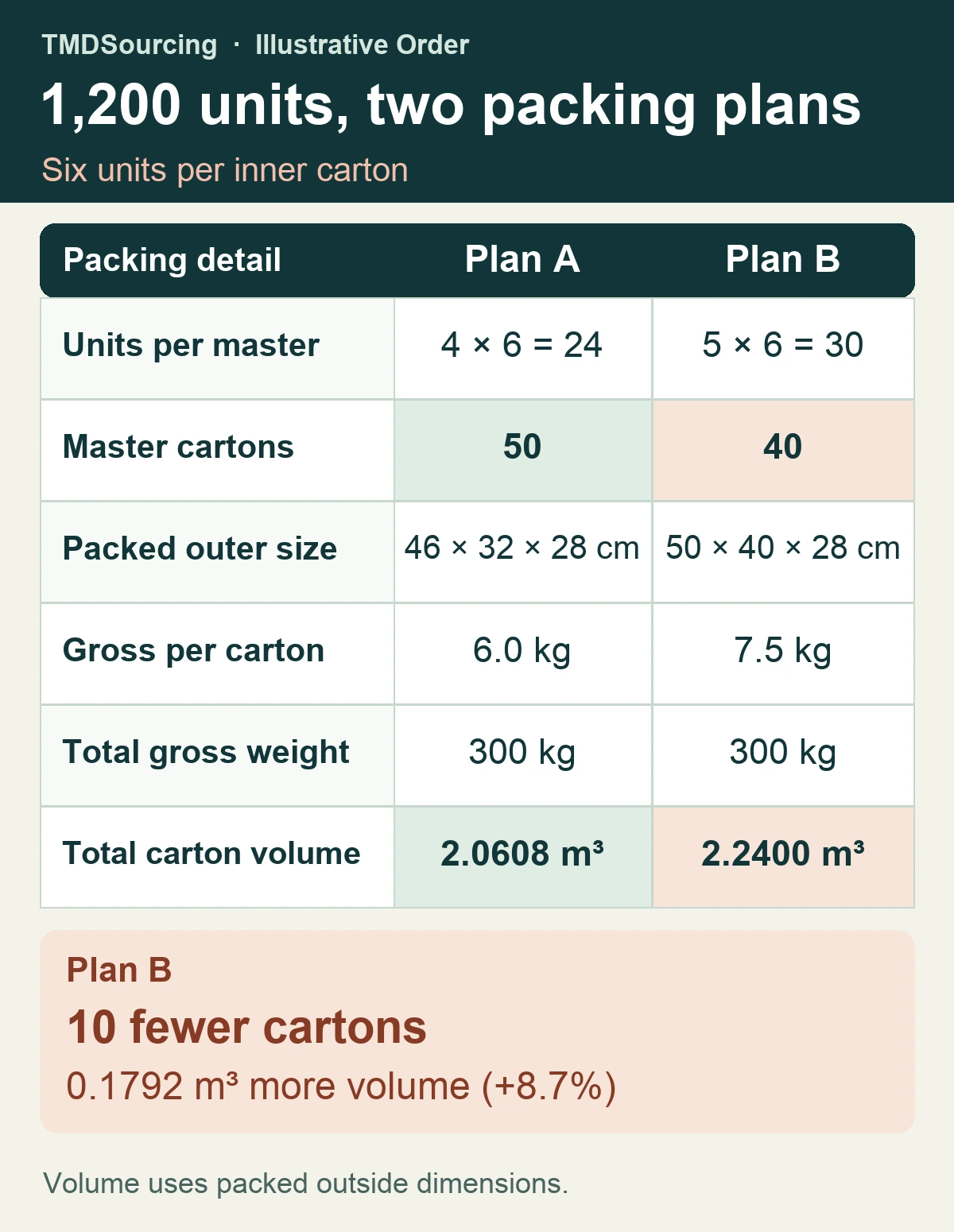
The box count comes from dividing 1,200 by 24 or 30. For Plan A, multiply 0.46 m × 0.32 m × 0.28 m to get 0.041216 m³ per carton. Across 50 cartons that comes to 2.0608 m³. Multiplying Plan B’s carton dimensions in meters and then multiplying by 40 gives 2.2400 m³. Both plans total 300 kg in gross carton weight.
Plan B uses 10 fewer cartons and about 8.7% more carton volume. Plan A keeps each carton lighter. Ask the warehouse whether either plan would affect receiving or unpacking charges and send both sets of numbers to your forwarder for quotes to the same destination. If either plan goes on pallets, add the pallet count and dimensions to that quote request. Choose the case pack after the factory confirms the protective arrangement and the warehouse confirms it can receive the cartons.
How to Confirm Carton Specs with Your Factory and Warehouse
Copy the fields below into your purchase order attachment or supplier email. Ask the factory to return its trial measurements and use a separate line for each carton type with a different size or count. Once you approve the packing version in writing, send the same specification to the factory, inspection team and warehouse.
Copyable bilingual packing specification
| Field字段 | Details to confirm确认资料 |
|---|---|
| Order and version订单与版本 | PO, SKU, packing revision and approved trial sample reference.采购单号、SKU、装箱版本及已批准的试装样编号。 |
| Packing quantities装箱数量 | Units per inner, inners per master, units per master and total cartons. State whether inner cartons are used.每内盒件数、每外箱内盒数、每外箱件数、外箱总数及是否使用内盒。 |
| Mixed and partial cartons混装箱与尾箱 | Carton IDs and actual count per SKU for any mixed or partial carton.逐箱填写箱号及各 SKU 实装数量。 |
| Carton and protection纸箱与防护 | Agreed carton material, packing orientation, cushioning and sealing method.确认的纸箱材质、摆放方向、缓冲保护及封箱方法。 |
| Packed dimensions and weights封箱尺寸与重量 | Outside L × W × H in cm and gross weight in kg per carton type. Add net weight or size tolerances if requested.按箱型填写封箱外尺寸(厘米)及单箱毛重(公斤)。按要求补充净重或尺寸容差。 |
| Labels and packing list箱标与装箱单 | Carton identification, label version and placement, and the matching packing-list entries.箱号、标签版本与位置,以及对应的装箱单记录。 |
| Trial packing evidence试装记录 | Inside packing photo, sealed carton with measurements, scale reading and label photo.箱内摆放照、封箱尺照、秤照及箱标照片。 |
| Receiving and approval收货与批准 | Receiving location and limits, buyer approval contact and process for reporting discrepancies.收货地点与限制、买方审批联系人及异常反馈流程。 |
Who checks the packing plan?
- Factory. Trial-pack the goods and send the photos, measurements and count. When a carton type or quantity changes, send the revised details for approval before packing the rest of the order.
- Buyer. Confirm the packing plan with the receiver. Approve the dated revision and record the agreed pack count, accepted dimensions and any tolerances in the purchase order or its packing attachment.
- Inspector. Check the agreed sample of packed cartons against the approved revision. Record actual counts, dimensions, gross weights and label placement by carton type. Send discrepancies, with carton references and photos, to the buyer for a decision.
- Warehouse. Use the packing list and carton IDs to reconcile the delivery. Flag discrepancies against the approved plan, hold affected cartons as agreed, and update the records once the buyer approves the correction. See the shipping marks guide and the China order consolidation guide.
Frequently Asked Questions
Do master cartons need inner cartons?
Inner cartons are optional. Use them when the product needs grouping or when a receiver picks goods in set quantities. Confirm the count and protection for the packing arrangement you choose.
Can a master carton hold mixed SKUs?
Ask whether the receiver accepts mixed cartons. If it does, agree on the quantity of each SKU in each carton and how the carton label and packing list will identify those contents.
Is there a standard master carton size or weight?
Choose a size and weight that fit your product, handling method, carrier and receiver. Check the packed sample against the limits for your specific shipment before approving the carton order.
Does a master carton need its own barcode?
Follow the receiving system’s requirements. Confirm whether it needs a carton-level trade item identifier, a warehouse label or both, and which barcode format and placement it expects. GS1 shipping case guidance
Where can I check Amazon FBA carton requirements?
Check Seller Central for the destination marketplace and your delivery method. Confirm box contents, dimensions, weight and labels in the applicable shipping workflow. Amazon US shipping and routing requirements
Get Help With Your Carton Plan
Share your SKU list, packaged unit dimensions and weights, order quantities, current carton plan and destination warehouse instructions. TMDSourcing can help coordinate trial packing with your factory and use the agreed specification for carton checks and warehouse delivery.