Factory Audit in China: What to Check Before Placing an Order
Use an on-site checklist to verify production capacity, subcontracting and quality records before you commit to a supplier.
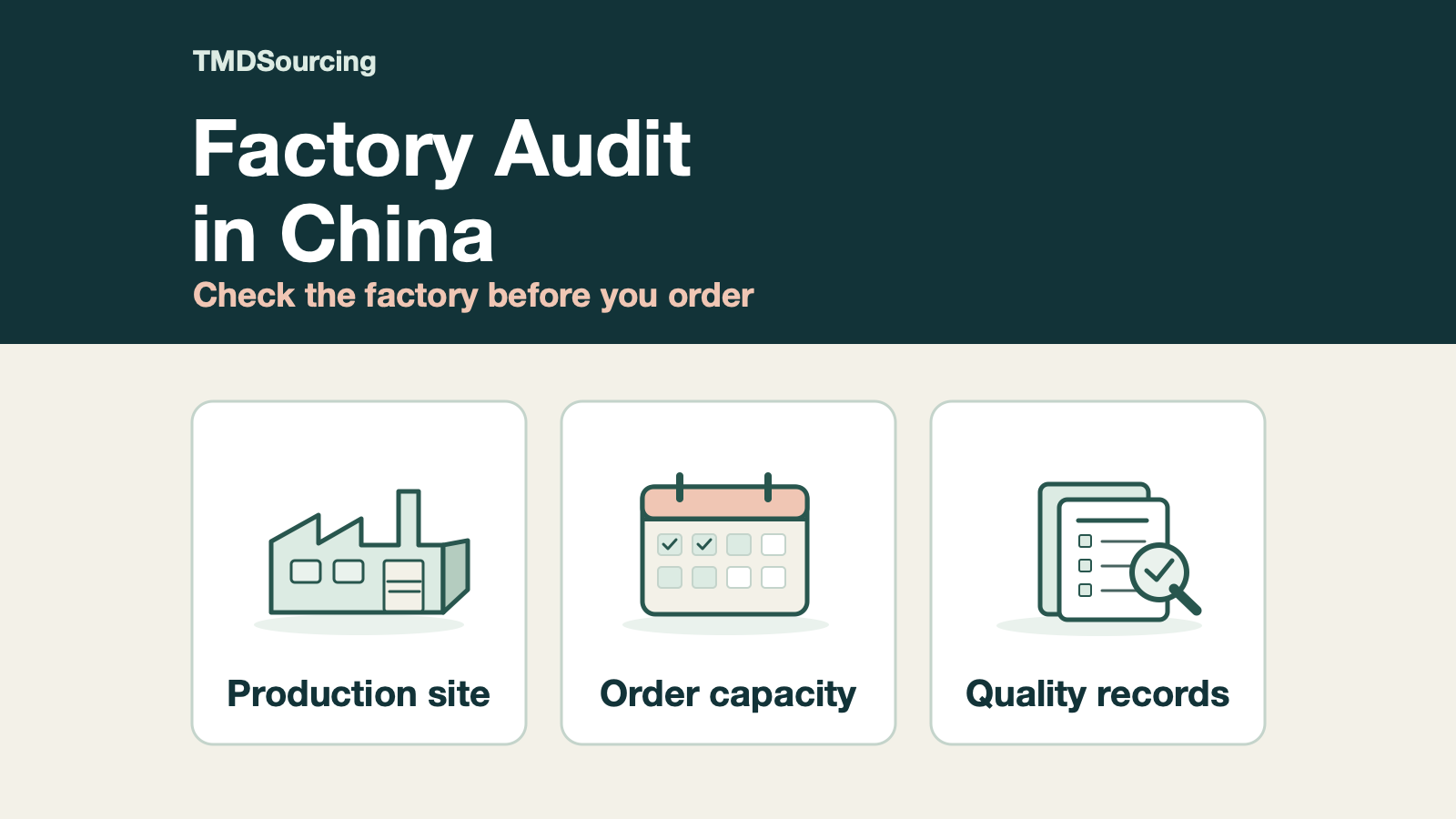
A factory audit in China assesses whether a specific production site can make your order to the agreed specifications and schedule. Start with the product revision, required quantity and date the full order must be ready. Ask for recent production and quality records, confirm where each key operation takes place, and check how much capacity the factory can reserve for you.
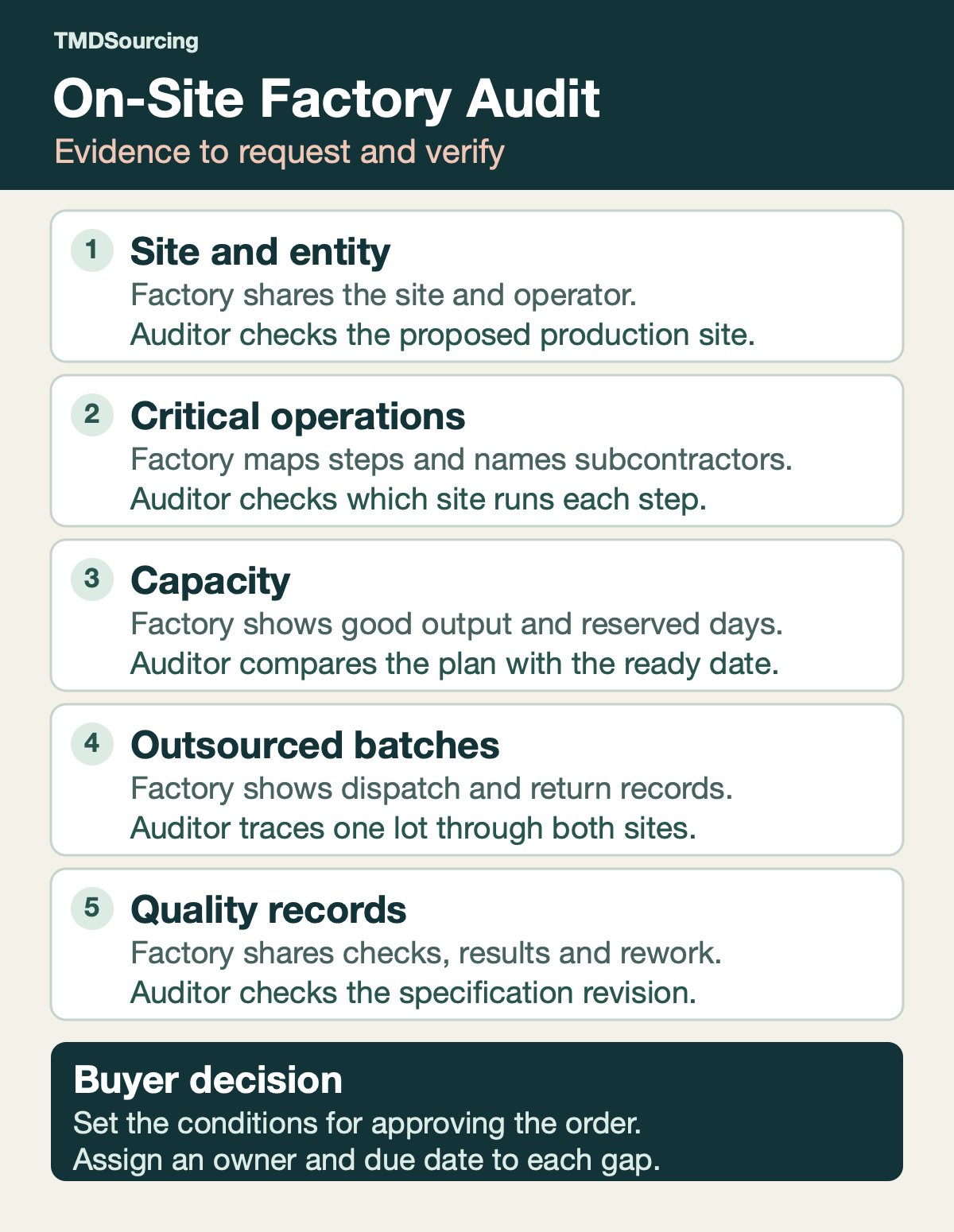
For each unresolved issue, record the evidence the factory needs to provide, who will check it and when it is due. Use that list to decide whether the purchase order can go ahead.
What Is a Factory Audit in China?
An auditor visits the proposed manufacturing site, observes relevant operations and reviews a sample of records against an agreed scope. For a custom bracket, for example, that could mean seeing how the metal is formed, tracing the handoff to the coater and reviewing the checks that release finished brackets for packing. The report should identify the site, the records reviewed, the findings and any areas the auditor could not access.
| Check | What it answers |
|---|---|
| Document verification | Who is the registered seller, who gets paid, and how is the seller linked to the factory? |
| On-site factory audit | Can this site and its manufacturing partners carry out the required work under the agreed controls? |
| Social audit | What do the selected audit criteria and findings say about workplace conditions and practices? |
| Product inspection | How do the units checked from a particular order compare with its specifications? |
Agree the protocols and scope before booking if your customer requires a specific audit. ISO 19011 gives guidance on management system auditing. Sedex’s SMETA is a method for social audits, with findings used to plan and track corrective action. ISO 19011 guidance · Sedex SMETA guidance
When Should You Audit a Supplier’s Factory?
Arrange the visit once you have a shortlist and know which product, process and delivery window to assess. Leave time before signing off the order for the factory to address findings or for you to review another site. These guides cover the earlier steps. Manufacturer shortlisting · Supplier verification
An on-site audit is especially useful in four situations.
- A first production run involves custom tooling or a tight deadline. Check whether the line, people and inspection equipment can be assigned during the needed window.
- A key operation is outsourced. Confirm where it happens, how the process requirements reach that site and how the factory checks the returned work.
- Volume or the manufacturing site changes. Verify the new line, schedule and controls, even when previous orders went smoothly.
- Defects recur. Focus the visit on the process and the records behind the problem, such as the checks after a tool change.
A live video walk-through can narrow the questions for a visit. Ask to follow the same route the product will take and request dated records for the steps you see. Put the remaining questions in the audit brief.
Factory Audit Checklist: What to Verify on Site
Give the auditor the product specification, approved sample if available, order quantity and ready date. Ask them to trace one comparable lot from material receipt to finished goods or packing. Record the dates, lot references and any gaps. Where records contain another customer’s information, ask for redacted extracts or record the details the auditor can verify on site.
| Audit area | Evidence to review and when to follow up |
|---|---|
| 1. Site and operator | Connect the order’s factory address and operating entity to the production areas visited. Follow up if the quote names a different site or the relevant line is elsewhere. |
| 2. Critical operations and subcontracting | Map each key operation to an internal workstation or a named external facility. Check the work instructions, dispatch records and return checks for an outsourced step. Follow up if the factory cannot show who controls that step. |
| 3. Capacity and schedule | Compare recent good output for a similar product with the schedule for the bottleneck operation. Allow for existing commitments, changeovers and any external processing. Follow up if the factory cites machine speed but has yet to reserve production time. |
| 4. Incoming and in-process checks | Review records for material acceptance and a check on the line. Match the results to the specification or drawing in effect for that lot. Follow up if the only evidence is a blank form or a record for a different revision. |
| 5. Measurement and testing | Ask to see a relevant measurement or functional test, the equipment used and its applicable calibration or verification record. Follow up if a required test needs a separate lab or equipment the facility lacks. |
| 6. Final checks and rework | Review a finished-goods inspection record and trace one defect through sorting, correction and recheck. Follow up if reworked units can return to saleable stock without a recorded check. |
| 7. Batch traceability and changes | Connect material IDs, work orders, outsourced batches and finished quantities. Confirm who approves changes to the material, site or process. Follow up if the records lose the lot ID at a handoff. |
Worked Example: Can This Factory Meet Your Delivery Date?
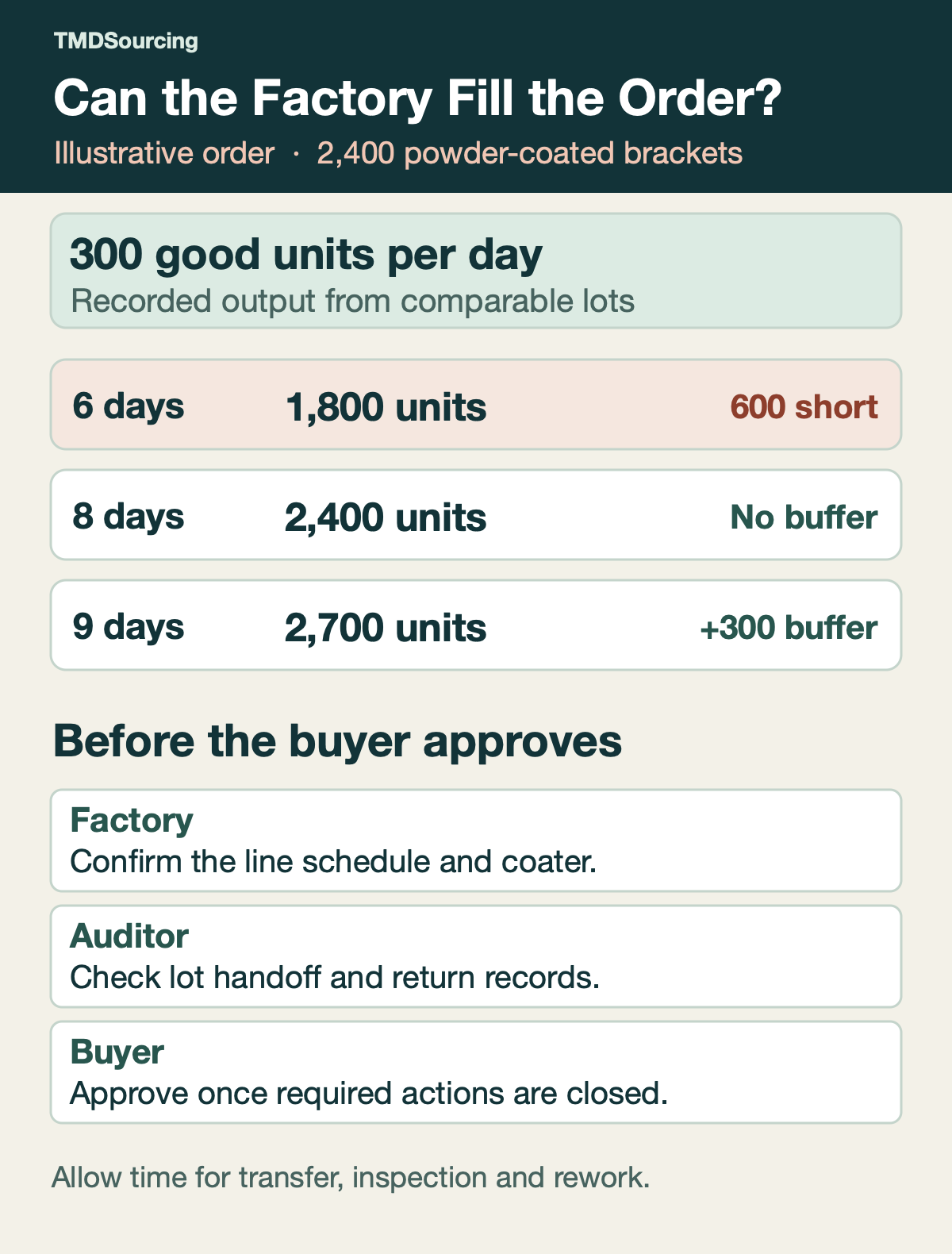
Suppose you need 2,400 powder-coated metal brackets. The factory quotes 500 pieces per day. Recent records for comparable lots show about 300 conforming brackets per day after coating and final checks. The factory has provisionally set aside six production days for your order. At the recorded rate, that would yield 1,800 brackets, leaving you 600 short.
| Days set aside | At 300 good units/day | Against 2,400 needed |
|---|---|---|
| 6 days | 1,800 | 600 short |
| 8 days | 2,400 | Meets quantity with no unit buffer |
| 9 days | 2,700 | 300 units above the target |
Ask the production lead for a revised schedule showing where the extra days fit and which coating shop will handle the order. A press can form brackets faster than the coater can return them. Compare the date the last batch can finish each operation with the date the buyer needs all goods packed and ready.
The nine-day option adds a quantity buffer in this example. Its feasibility depends on the availability of the line and coater, comparable output for your product and enough time for transfer, final inspection and rework before the ready date.
How to Read an Audit Report and Decide Whether to Order
Start with the audit date, exact site address, operations observed and records sampled. Check whether the report covers the same line, product revision and outsourced steps proposed for your order. Ask the auditor to distinguish direct observation, documents reviewed and statements still to verify. For example, seeing a dispatch record establishes the shipment recorded by the factory. It leaves a separate question about conditions at the external coating site.
- Proceed
- The required facilities and controls have been checked, and the agreed schedule can cover the order. Record the approved site, route and specification before issuing the PO.
- Correct and recheck
- A fixable gap remains. Agree what the factory will change, who owns it, when it is due and how you will verify the result before making the purchase decision.
- Hold the order
- A condition that matters to this order is still open, such as an unidentified coater, missing lot records for a critical operation or a schedule that cannot meet the agreed date. Review an alternative route, site or date.
Copyable Audit Evidence and Follow-Up Record
Use these fields for each issue the factory needs to close before you place the order.
| Field | Example entry |
|---|---|
| Finding and source | FA-02. The comparable work order lists coating. The proposed coating shop and the lot IDs for returned work still need confirmation. |
| Evidence needed | Coater’s name and site address, the current coating specification and a matched dispatch, receipt and return inspection record for one comparable lot. |
| Owner and due date | Factory production lead. Submit the evidence and revised production schedule before the PO approval meeting. |
| Verification | The auditor checks the location, matches the lot references and records how the return inspection was verified. |
| Decision | The buyer approves the order once the records and schedule meet the agreed conditions. |
Keep a reference to the original finding beside any updated evidence. If the factory proposes a different coater or schedule after the visit, review the revised plan against the same approval conditions and circulate the new version to the people following the order.
Pass the approved site, specification version and open monitoring points to whoever follows production. An audit finding about coating can become a check on early production lots and a specific item in the final inspection brief. During-production inspection guide · Pre-shipment inspection checklist
How Much Does a Factory Audit in China Cost?
Costs depend on the location, number of sites, on-site time and technical scope. Checking a site and its basic production records takes a different scope from tracing a specialist process across two facilities. Some providers quote per person-day, which is one person’s day of work. Others quote for the full assignment.
Ask each provider to quote the same scope. Confirm what the fee includes for travel, report language, photos, delivery time and a follow-up review. Ask how a visit to a second site or a return visit would be billed. Check whether the auditor has experience with the manufacturing operations you need them to observe.
To request a useful quote, send the factory’s proposed address, product specification or drawing, estimated quantity, ready date and key operations. Tell the auditor what evidence you need before deciding whether to proceed. Agree the access arrangements with the factory and ask whether the relevant line will be running on the day.
Frequently Asked Questions
How long does a factory audit take?
A focused single-site review may fit in one day. Allow additional time to confirm access, observe the relevant work, review the report and resolve findings. Multiple sites, shifts or technical processes change the time required.
Can I audit a factory remotely?
Video and shared records can help answer specific questions before an on-site visit. Ask the reviewer to state what they observed live, what they checked from documents and which operations or sites remain unverified. Use those limits to decide whether to arrange an on-site check.
How should I use an ISO 9001 certificate or an existing audit report?
Check the issuing body, current status, entity, site and scope of the certificate. For an audit report, also check the date, processes reviewed and open actions. Use the records that apply to your planned factory and work, then ask for current evidence of the capacity and product controls your order needs. ISO 9001 requirements
When should I book product inspection after an audit?
Choose a point early enough to act on the result. For example, check the coating on the first representative production lot when the factory can still adjust the process. Arrange a final inspection when the agreed goods are ready to check and you have time to resolve problems before dispatch.
Discuss Your Factory Audit Scope
Have a factory in mind? Share its city, the product, your order quantity and when the goods need to be ready. Tell us which production or quality question you need answered before deciding on the order.