Container Loading Supervision in China: A Buyer’s Checklist
Check what goes into the container, resolve carton shortages while the cargo is still accessible, and leave a record your team and forwarder can check.
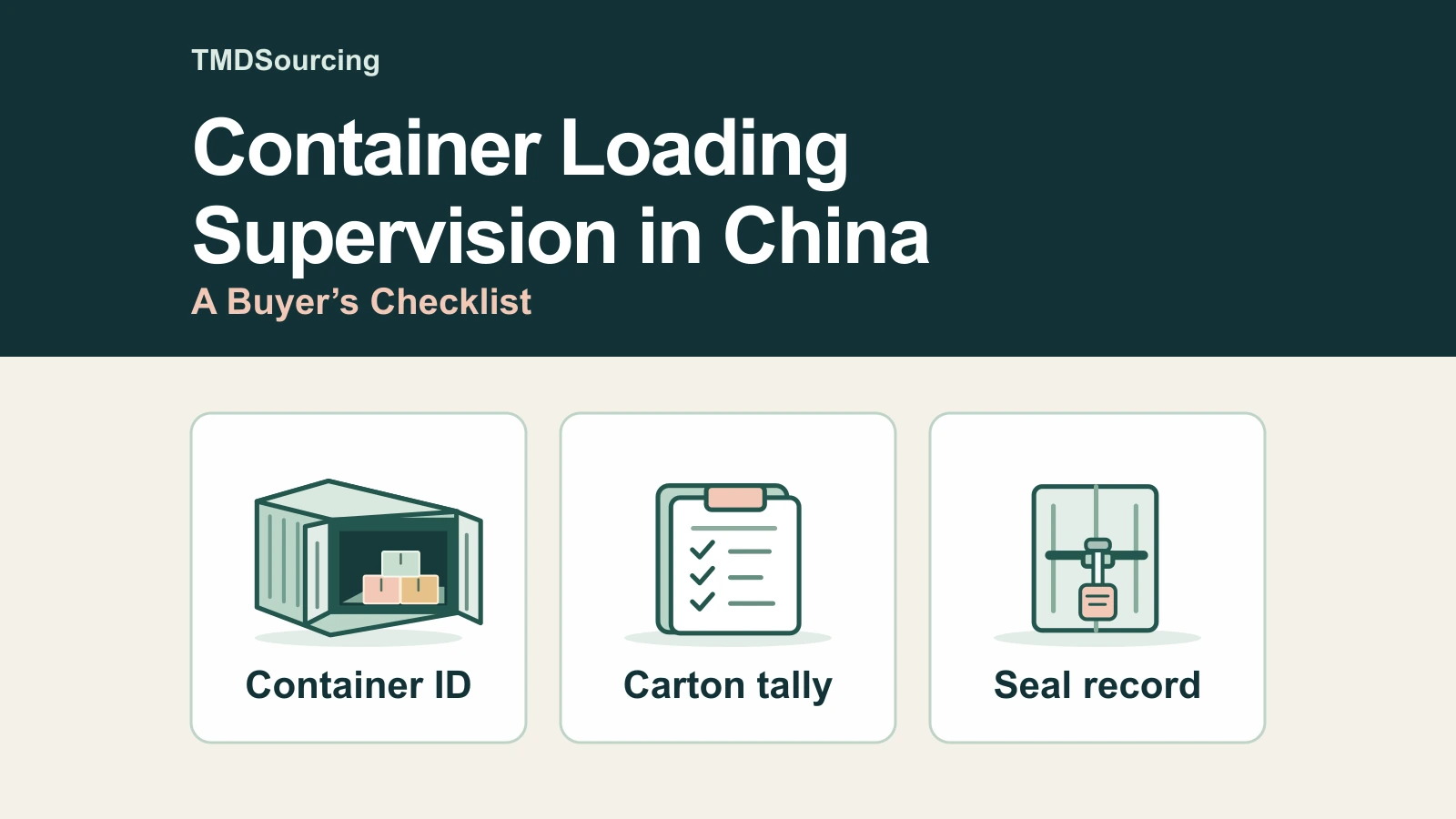
Container loading supervision in China is an on-site check at the factory or warehouse where the goods are loaded. It records the empty container’s visible condition, the cargo and quantities observed going in, and the seal applied when loading is complete.
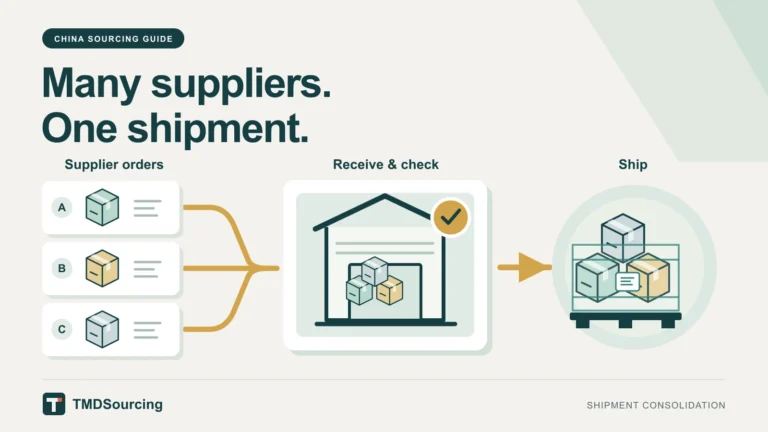
Before sealing, compare the actual carton count, carton identity and packing list revision. If two suppliers share one container, reconcile each supplier’s lines before accepting the total.
What Does Container Loading Supervision Check?
You may also see this service called container loading inspection, a container loading check or CLS. Agree what the supervisor will see and record. An importer might need a count of every master carton at the loading point, photos of selected shipping marks and a record of cartons removed from the load. Some assignments include opening selected cartons by agreement. Specify how to identify, check and close any cartons opened.
| Check | What the buyer learns |
|---|---|
| Pre-shipment inspection (PSI) | How the inspected units from a production lot compare with agreed product, packaging and labeling requirements. |
| Container loading supervision (CLS) | Which marked cartons and quantities were observed entering the booked container, and how the load and seal were recorded. |
Connect the records by PO and lot when using both checks. A PSI report may cover an approved production lot while the warehouse is staging several similar lots for different buyers. Give the loading supervisor the reference for the lot cleared for this shipment. Pre-shipment inspection checklist
When Should You Arrange a Loading Inspection?
Use CLS when a loading error would be expensive to correct. A first shipment from a new supplier, a high-value or fragile order, and an order with look-alike cartons all warrant closer attention. A container combining several POs or factories adds another risk. The total can match even when a carton from one supplier has been substituted for a carton from another.
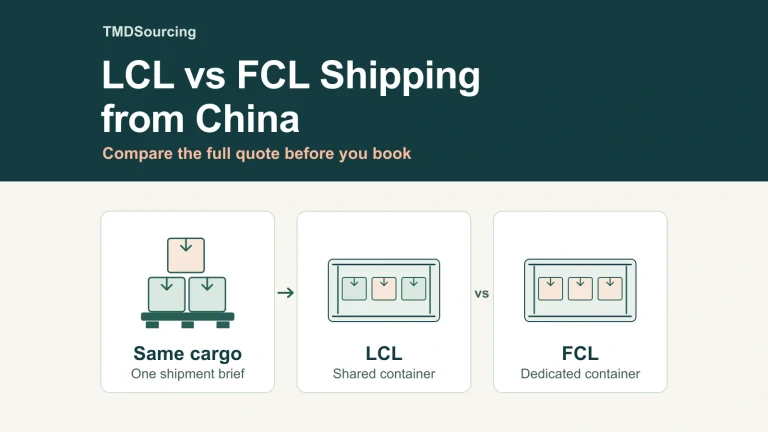
With full container load (FCL), confirm access at the actual loading site, whether it is a factory or a consolidation warehouse. For less than container load (LCL), ask the forwarder what can be observed at its shared facility. If supervision is limited to your warehouse handover, check your carton count, marks, condition and warehouse receipt there. Ask what evidence you will receive for any later handling of your freight. LCL vs FCL shipping from China
Before Loading: Agree on Counts, Evidence and Authority
Confirm the loading brief and packing list
Send one dated packing list with a revision number. For each supplier, list the PO, SKU, lot where applicable, shipping mark and expected number of cartons. Specify units per carton for mixed or partial packs, and carton counts per pallet if the goods are palletized. Confirm the loading address, date, truck window, container type and warehouse contact.
Decide where the supervisor can count safely and what record will support the tally. Specify who can ask the crew to pause, who can verify a replacement and who accepts a short shipment in writing. Ask the forwarder for the latest time to change the planned shipment or update documents. Give the warehouse and supervisor the same contact list and revision before the truck arrives.
Check the empty container
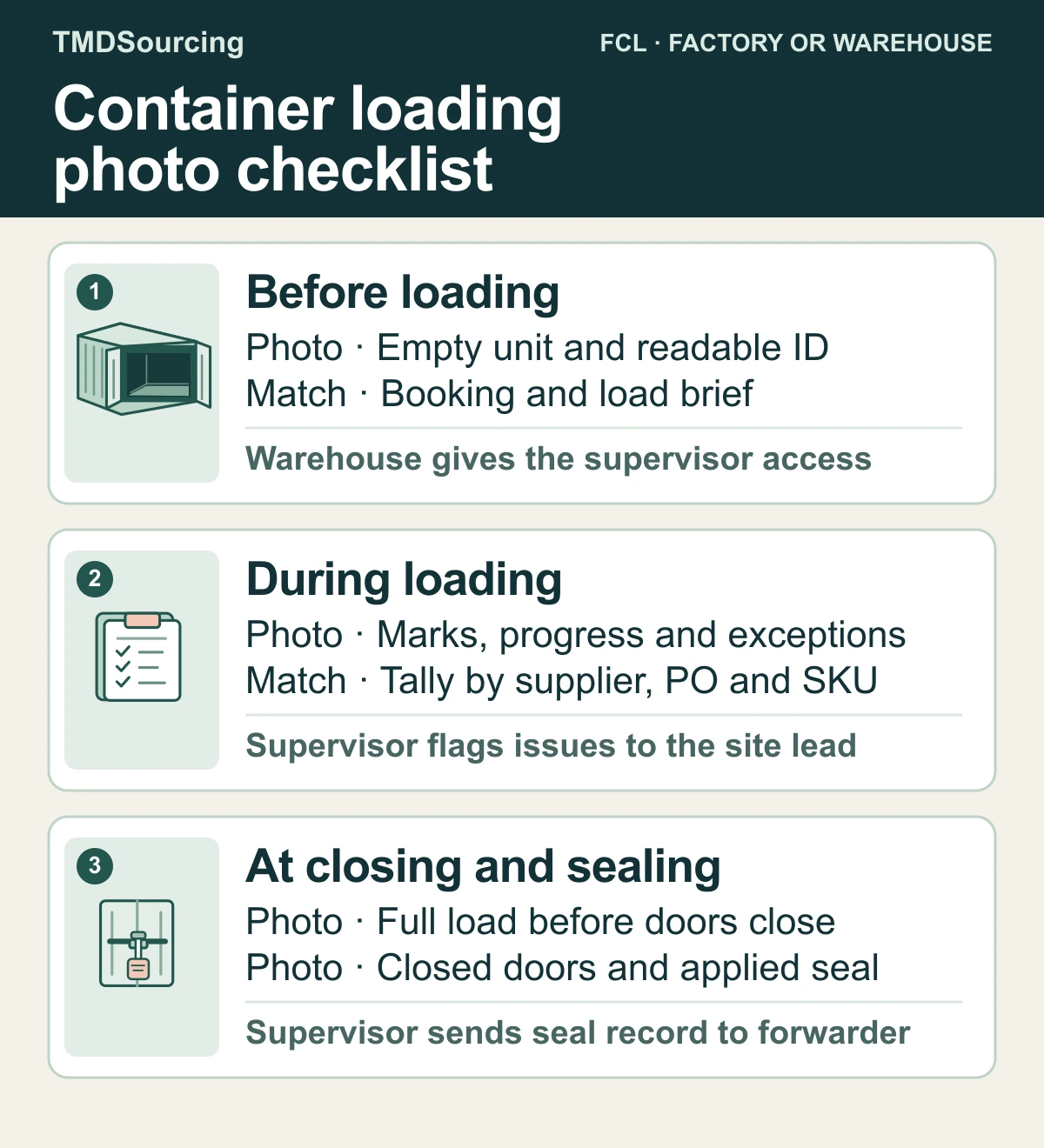
Record the container number on arrival and match the number and equipment type against the truck or booking details available for the shipment. From a safe position, have the supervisor document the empty unit and visible conditions such as holes, signs of water, damaged flooring, contamination or door issues. Get a wide photo and a legible photo of the identifier.
Send observations that could affect loading to the site lead and forwarder before the first cartons go in. The site and equipment contacts can assess whether the container needs further checks or replacement. Qualified loading staff handle the stowage and securing plan for the specific cargo. IMO guidance on cargo securing and the CTU Code
During Loading: Tally Cartons by Supplier, PO and SKU
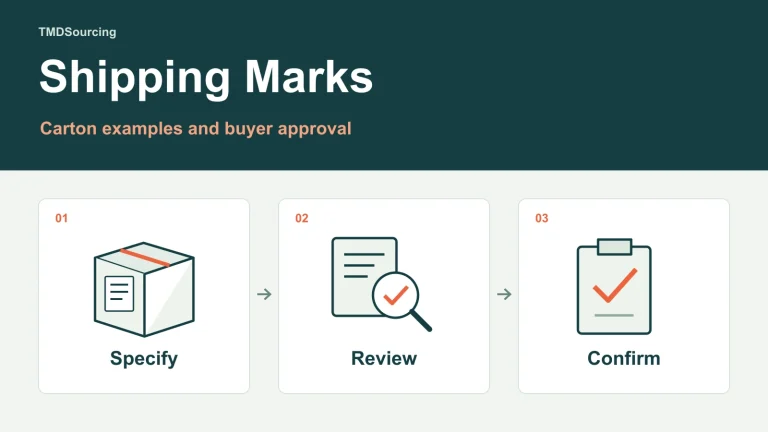
Count at the agreed loading point. Read the shipping mark, then match it to the supplier, PO and SKU on the approved list. Add the lot when two production runs use the same SKU. Keep a separate tally for each container when more than one is loaded. If wrapped pallets limit what can be seen, record the pallets observed and what supports the carton counts inside them. Shipping marks guide · Master carton guide
Keep the staged and loaded counts in separate columns. Mark a damp, mislabeled or crushed carton as held when the warehouse sets it aside. Link its photo and reason to the corresponding line. If the carton is later cleared or replaced, record that disposition and count the cleared carton when it crosses the loading point.
Take progress photos and close-ups of the marks that identify the cargo. Log the stages the supervisor could see and any gaps, such as cartons already inside on arrival. Send the site lead the affected PO, carton count and photo reference while there is time to investigate.
What If 298 of 300 Cartons Are Loaded?
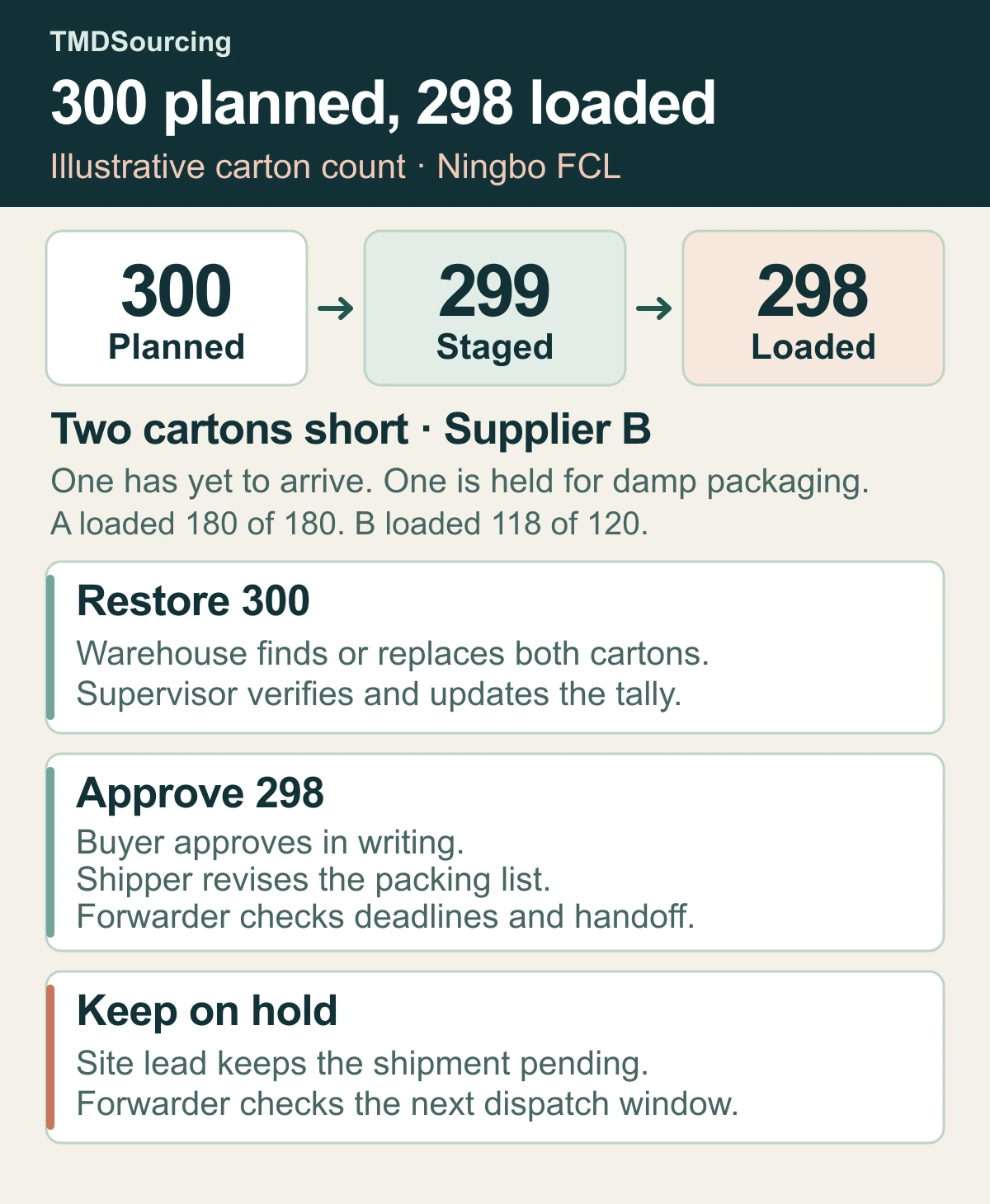
In this illustrative example, two suppliers share one FCL at a Ningbo consolidation warehouse. The packing list calls for 300 cartons. The warehouse stages 299, and the supervisor observes 298 entering the container. One carton from Supplier B has yet to arrive and one is held because its outer packaging is damp. Supplier A’s 180 cartons reconcile. How multi-supplier consolidation works
| Supplier / PO / SKU | Plan | Staged | Loaded | Held | Short |
|---|---|---|---|---|---|
| Supplier A PO-101 / SKU-A | 180 | 180 | 180 | 0 | 0 |
| Supplier B PO-205 / SKU-B | 120 | 119 | 118 | 1 | 2 |
| Total cartons | 300 | 299 | 298 | 1 | 2 |
The staging count includes the carton later set aside. The short column is plan minus loaded, so it already includes the held carton.
Recount and locate the discrepancy
The site lead keeps the shipment pending under the agreed instructions. The supervisor rechecks the affected line with the warehouse, which compares incoming receipts, the staging tally and the held carton. The supervisor sends the buyer the two-carton variance, the photo reference and what the warehouse has confirmed about each carton.
Resolve, approve a partial shipment, or hold
On the partial-shipment path in this example, the exception entry could read “PO-205 / SKU-B. 120 planned, 118 loaded. Buyer approved 298 cartons in writing. Packing list v2 issued for this dispatch. Two cartons remain due on PO-205.” Keep the original plan and the approval reference with the revised list so the receiving team can see why the shipment changed.
Before the Container Leaves: Match the Count, Seal and Documents
Before the doors close, compare the loaded tally with the shipment version of the packing list. Include any written approval for a change and take a wide photo of the final load while it is still visible. Confirm that the operator has addressed issues raised during loading under the agreed instructions.
After the authorized person applies the seal, record its number, the container number and the time. Take a wide photo of the closed doors and a close-up of the legible seal in place. Send the forwarder the tally, seal record, approved exceptions and packing list revision together. If the transport instructions or draft document come later, ask the forwarder who will check the matching fields when they become available.
Verified gross mass (VGM) is a separate record for packed containers subject to SOLAS. It covers the packed container’s gross mass, including the container itself. The shipper is responsible for providing that verified weight in time for the vessel’s loading plan. Confirm the method and submission cutoff with the shipper and forwarder. IMO verified gross mass guidance
What Should a Container Loading Report Include?
The report should let someone away from the warehouse trace a number back to the shipment and the evidence. Copy the fields below into your loading brief and ask the supervisor to return the completed record with the photos.
- Shipment header
- Loading date and site · booking reference · container number and type · original and final packing list revisions · seal number and time.
- One tally line per cargo group
- Supplier · PO · SKU · lot · carton mark · planned · staged · loaded · held · short · photo reference.
- One entry per discrepancy
- Affected tally line · observed issue · who has the next action · buyer’s decision · approving person and time · revised record reference.
- Final handoff
- Observed scope and gaps · last confirmed counts · shipment status · evidence sent to whom and when · document changes still due.
Keep the photo references with the tally so the reader can find the right image. The loading photo checklist shows what to capture at each stage.
How to Book Container Loading Supervision in China
Start with the loading city, date, number of suppliers and expected cartons. Once the slot is confirmed, share the site contact, truck window, container count and type, packing list revision and any special checks. Confirm that the warehouse will allow the supervisor in before loading starts and specify how changes in the truck schedule will be communicated.
Ask for a quote against the actual scope. Several loading locations, multiple containers, an extended loading window or a detailed SKU tally can change the time required. Confirm who will receive urgent calls during loading, when the report is due and how waiting time is handled if the vehicle is late.
Frequently Asked Questions
Should I book loading supervision after a PSI?
Arrange both when you need assurance about the inspected lot and an independent record of what entered the container. Use the PSI report to identify the lot approved for packing. Book loading supervision for the actual truck window and give the supervisor the matching PO and lot references.
Can I arrange loading supervision for LCL?
Ask the forwarder whether the supervisor can attend at the consolidation facility and which parts of the shared loading process are visible. Where access ends at receiving, focus the check on your carton count, marks, external condition and warehouse handover receipt.
Who can accept a carton shortage?
Agree on a buyer or authorized representative who can accept a partial shipment in writing. The supervisor documents the variance. The authorized shipper and forwarder coordinate any document changes and confirm whether the shipment can meet the revised plan.
What is in a container loading report?
A useful report links the booking and container to the actual carton tally, loading photos, seal number and exceptions. It gives the packing list revision, who approved any change and what evidence went to the forwarder. Ask that observation gaps appear in the record.
Share Your Loading Plan
Tell TMDSourcing your loading city, planned date, number of suppliers and expected carton count. If you have a draft packing list, include the details you want checked. We’ll use them to discuss the scope and timing for your shipment.
Start a Project