DDP vs DAP for Imports from China: Who Clears Customs and Pays Import Charges?
Compare two quotes to the same receiving dock and confirm who handles import clearance, pays the charges, and can provide the records.
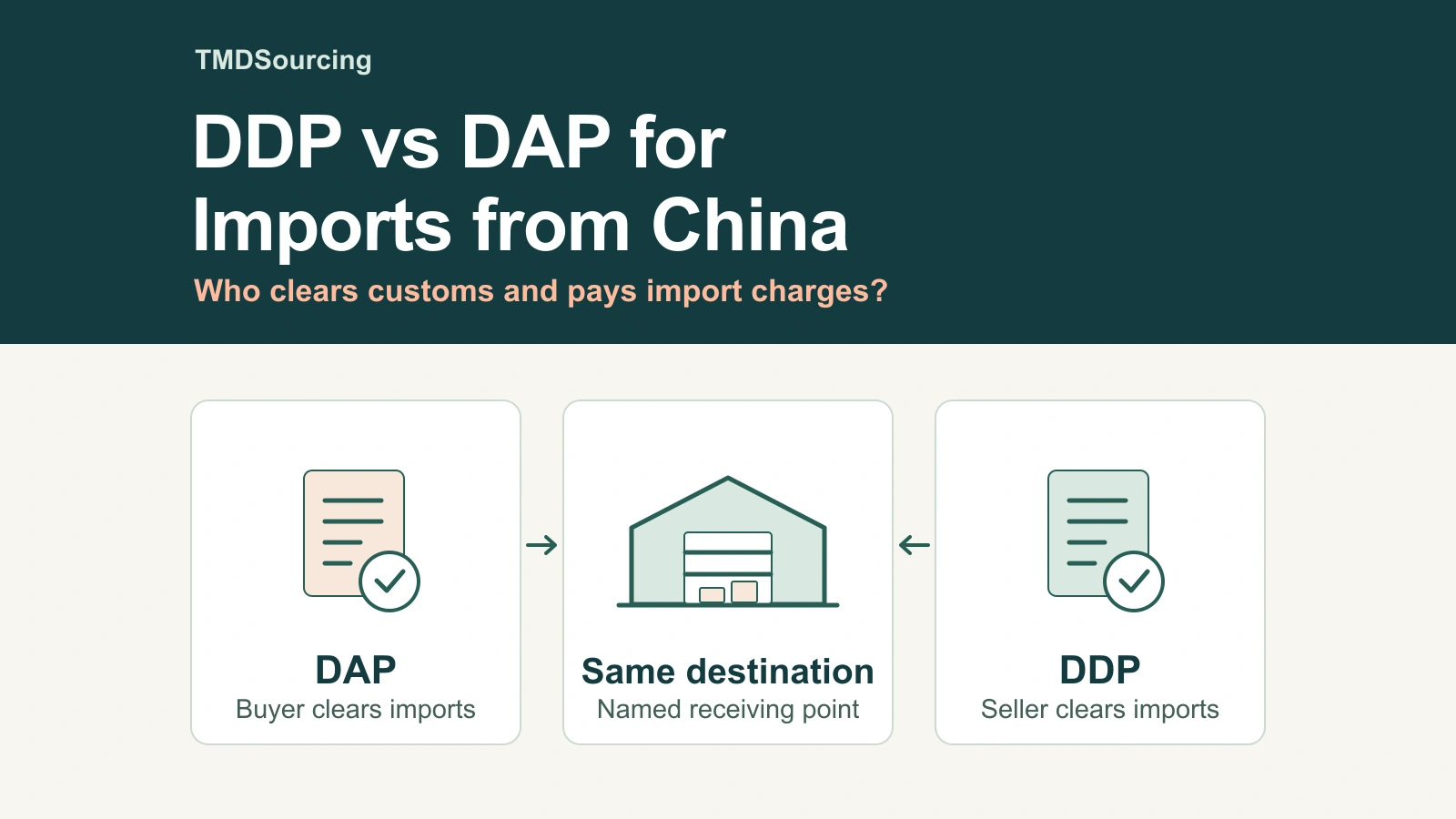
Under DAP, the buyer handles import clearance and pays the applicable import duties and taxes. Under DDP, the seller takes care of those obligations. Both terms normally place delivery at a named destination, with the goods on the arriving vehicle ready to unload.
When comparing offers from China, ask for DAP and DDP offers to the same receiving point. Then confirm who can legally handle the import, which charges each quote includes and what records you will be able to obtain. Those answers can change which offer you approve.
DDP vs DAP at a Glance
DAP means Delivered at Place. DDP means Delivered Duty Paid. Both are Incoterms® 2020 rules for sales of goods and can be used with any mode of transport. Under either term, the seller arranges and pays for transport to the named destination. The import clearance difference determines which party needs a workable arrangement in the destination country. ICC rules for any mode of transport
Swipe to see all columns.
| What to confirm | DAP | DDP |
|---|---|---|
| Transport to the named point | Seller | Seller |
| Export and applicable transit clearance | Seller | Seller |
| Import clearance and applicable import duties, taxes and related costs | Buyer | Seller |
| Normal transfer of risk | At the agreed point, on the arriving vehicle, ready to unload | At the agreed point, cleared for import, on the arriving vehicle, ready to unload |
| Unloading | Buyer normally unloads at its risk. Check whether the seller's carriage contract already covers the cost. | Same unloading basis as DAP. |
| Cargo insurance | Neither party is required by the rule to insure for the other. | Same insurance basis as DAP. |
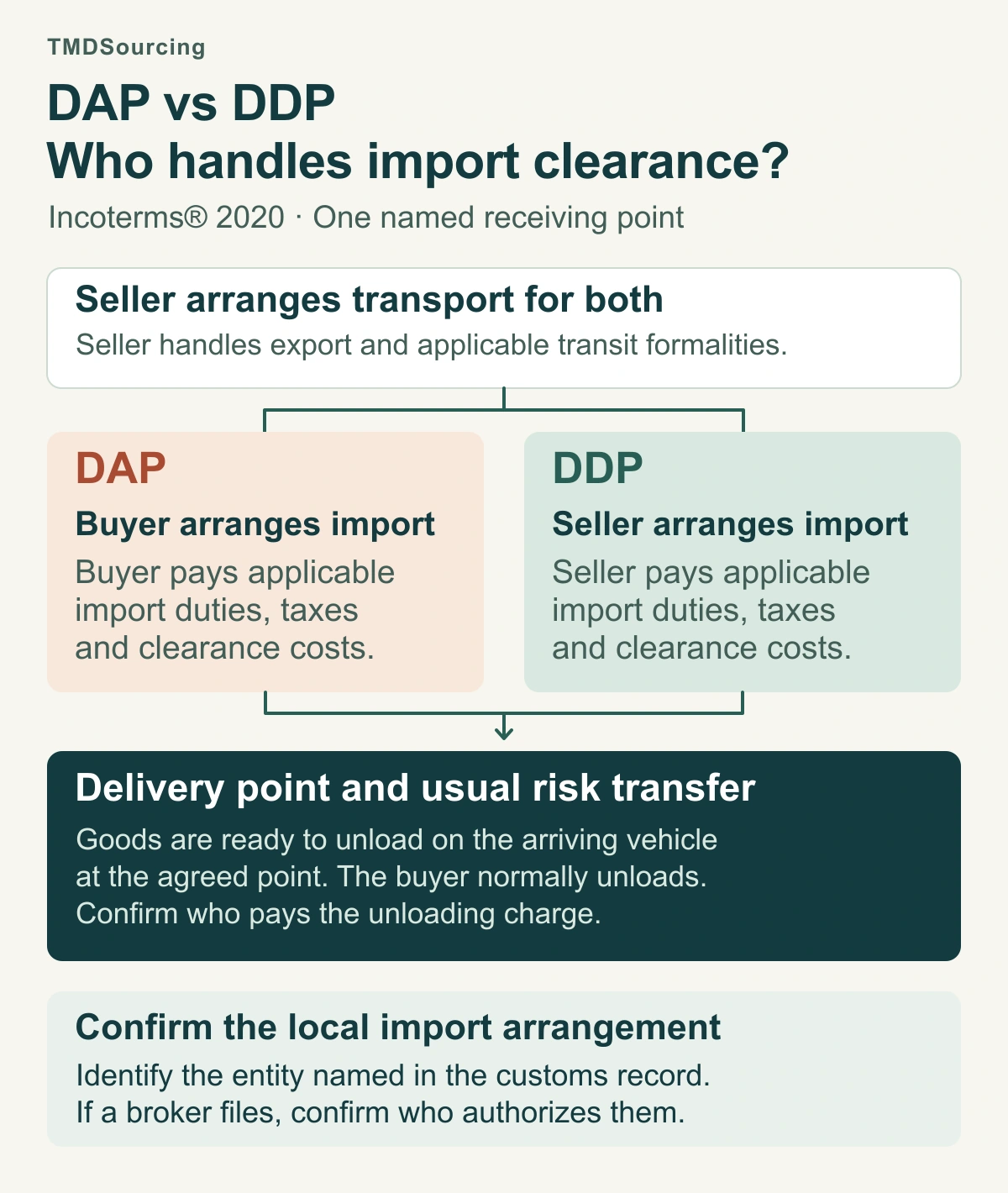
Put the warehouse address and the specific gate or receiving dock in the purchase order alongside the rule and version. For example, write DAP Buyer Warehouse A, Goods-In Door 2, [full destination address], Incoterms® 2020. The normal risk point is the agreed destination. ICC rules also address losses arising when the buyer fails to fulfil applicable obligations, such as arranging import clearance under DAP or providing required assistance under DDP. ICC guidance on DAP and DDP
What Does “DDP Shipping” Include in a China Quote?
Read the supplier's offer, sales contract and freight offer together. The supplier's offer states the proposed price and scope. The sales contract assigns obligations between buyer and seller. The freight offer identifies which services the carrier or forwarder will provide and which party it will bill. A freight quote marked “DDP shipping” prompts you to check how that offer fits the sales contract and the proposed import process.
Get the seller to list its price for the goods and delivery to the exact receiving point. Ask whether the quote includes brokerage, applicable duties and import taxes, final delivery and any unloading service. Mark charges as included, payable separately, pending or conditional. For disbursement fees, inspection charges, storage, waiting time and redelivery, record what would trigger each expense, who would pay it and how the buyer would be notified. Confirm the quote validity and whether a rate or duty change could trigger a price revision under the contract.
Record insurance, payment terms and the transfer of ownership in the relevant agreements. Compare LCL or FCL separately if you still need to settle the ocean freight arrangement. For goods quoted at origin, confirm the freight scope needed to reach the same destination before comparing prices. ICC on sales contracts and Incoterms® rules · LCL vs FCL shipping from China · EXW vs FOB for China purchases
Can the Seller Actually Clear the Goods Under DDP?
Ask for the legal entity expected to appear on the import entry, the local customs broker or representative and how that party will be authorized. “Importer,” “declarant” and “representative” can have different meanings depending on the country. A broker can act in a representative capacity. Write down the role of each organization, including the buyer or consignee if its details will be used. Then have an appropriately qualified local party confirm that the proposed setup works for the product and destination. Local rules can affect which entities can carry out import formalities. ICC on national regulatory barriers
Ask who gives the broker the product description, origin, value and classification information, who funds or remits the import charges, and who will respond to questions from customs. When someone requests your business or tax number, clarify how it will be used on the entry and what responsibilities the proposed role carries before supplying it.
Agree in advance which records you can receive once the shipment clears. A seller can explain its documentation process before shipment and show a redacted example when available. Ask for the shipment-specific entry reference and any agreed tax payment or accounting records after clearance. For example, UK import VAT documentation can differ depending on whether VAT is paid at import or accounted for through postponed VAT accounting. Confirm whether the records available to your business support its own accounting and any claim it is eligible to make. HMRC import VAT certificates · HMRC postponed VAT accounting
Worked Example: Two Quotes to the Same Receiving Dock
One Chinese supplier quotes the same 1,000 units of general merchandise under both terms. Both offers use USD, the same packing, cargo-ready date, shipment and validity period. Delivery is to Goods-In Door 2 at Buyer Warehouse A, with the full address recorded in each offer. At handover the goods will be on the arriving vehicle ready to unload. Both quotes use the same scope for unloading and insurance, which the buyer reviews separately.
These invented figures illustrate a purchase decision. The estimates use no specific country's tax rates or recovery rules.
Swipe to see all columns.
| Amount in USD | DAP | DDP |
|---|---|---|
| Seller's offer | $7,800, including $6,500 goods and $1,300 carriage | $8,840, stated to include goods, carriage, import clearance and applicable import charges |
| Local brokerage | $160, buyer pays separately | Stated as included |
| Estimated duty | $540, buyer pays separately | Stated as included |
| Estimated import tax | $400, buyer pays separately | Stated as included |
| Expected cash outlay before unloading | $8,900 | $8,840, subject to confirmation of the import arrangement |
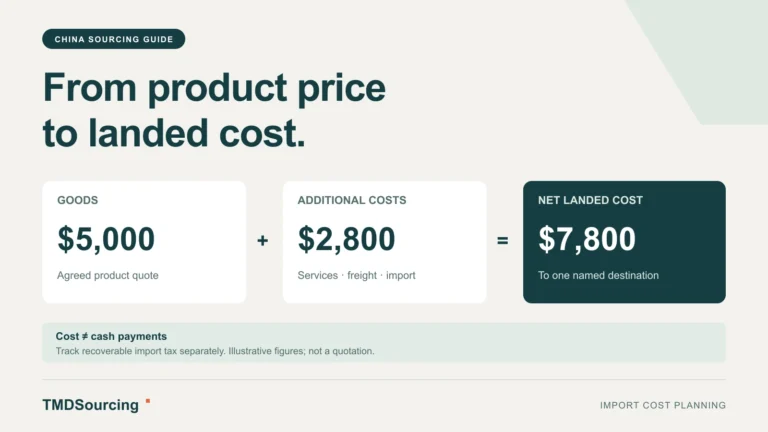
DDP is $60 lower on the stated figures. To compare the totals, the buyer adds the estimated clearance and import charges to the DAP offer. The buyer counts the DDP bundle once. The comparison uses expected cash paid before unloading and leaves potential tax recovery to a separate calculation. How to calculate landed cost from China
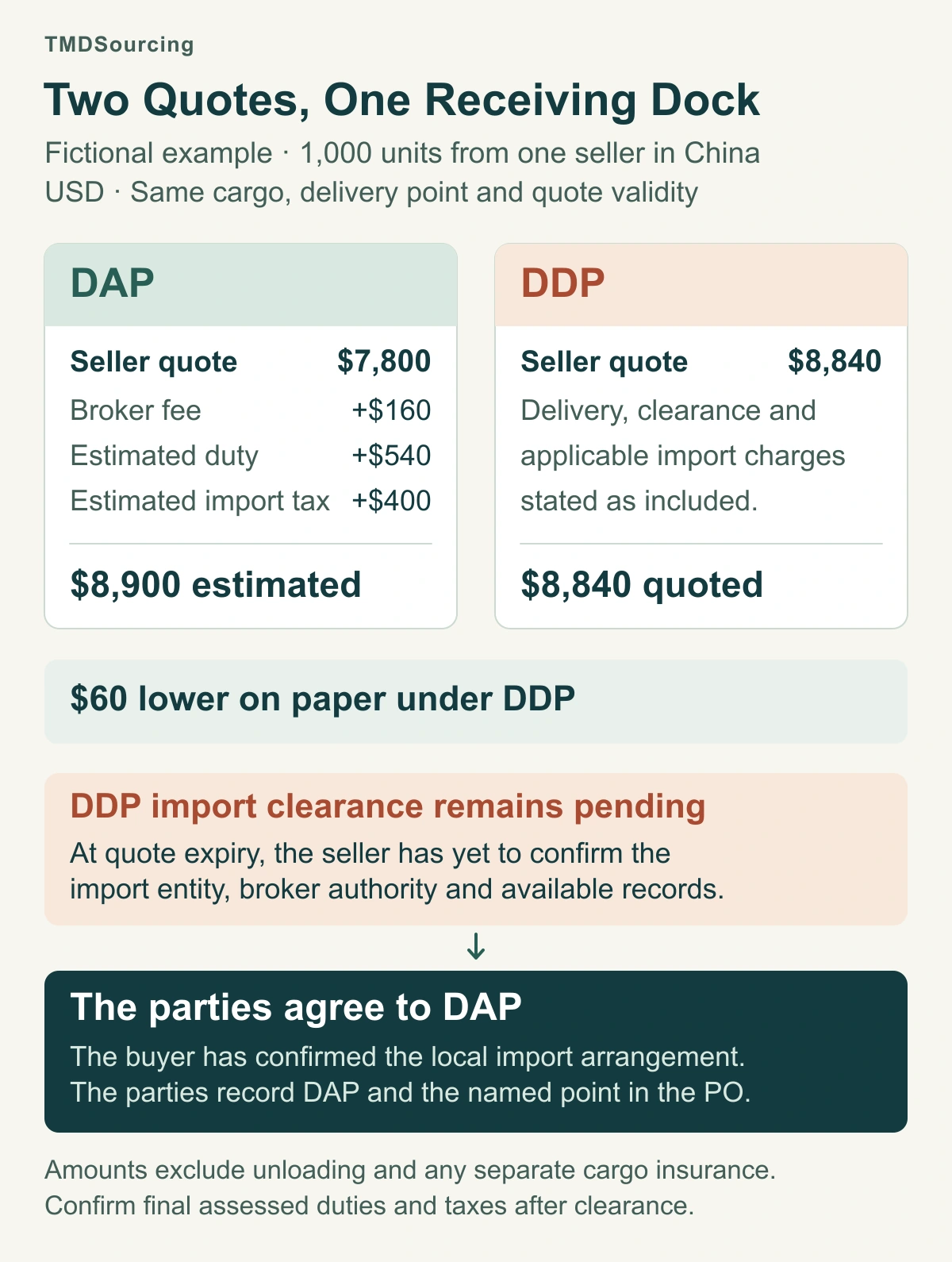
The buyer's logistics lead has already confirmed the buyer's DAP import setup with a local broker. For DDP, the seller states that import charges are included. Its export lead still needs to confirm who would appear on the import entry, who would authorize the broker and which records the buyer would receive. The buyer records DDP as pending and asks for written confirmation by the working day before the quote expires.
The DDP quote expires before the seller confirms its import arrangement. The buyer and seller agree DAP to the same dock. They confirm the valid revised quotation, purchase order and shipping instructions. The buyer sends the import details to its broker for pre-dispatch review. After clearance, the buyer checks the actual import charges and records against the broker's estimate and the agreed documentation. If the seller had confirmed the DDP import setup in time, the buyer could have considered both offers using the verified prices and documentation.
A Checklist Before You Agree to DAP or DDP
Use one record for both offers. Start with the purchase order reference, quote revisions and expiry dates, product and packing details, currency, named delivery point and Incoterms® version. Enter each charge once and identify who will invoice or collect it. Give pending items a named owner and a deadline. After dispatch, keep the same record for checking final charges and documents.
Swipe to see all columns.
| When and what to confirm | DAP amount, responsibility and status | DDP amount, responsibility and status | Who confirms, deadline and evidence |
|---|---|---|---|
| Before ordering – delivery point and scope | ___ | ___ | ___ |
| Before ordering – proposed import entity, broker and authorization | ___ | ___ | ___ |
| Before ordering – included charges, separate costs and exceptions | ___ | ___ | ___ |
| Before dispatch – invoice, packing list and shipping details align | ___ | ___ | ___ |
| Before dispatch – receiving appointment, equipment and unloading | ___ | ___ | ___ |
| After clearance – entry reference and available duty or tax records | ___ | ___ | ___ |
| After delivery – delivery proof and reconciliation of actual charges | ___ | ___ | ___ |
For the example above, the DAP import row would read confirmed in writing by buyer logistics and its broker. The DDP row would read pending with seller export lead, due one working day before expiry. The DAP tax rows would still show estimated, with the final assessment recorded once it was available. That distinction lets the buyer approve a workable import setup while keeping the variable costs visible.
When Should You Choose DAP or DDP?
Consider DAP when the buyer has verified its eligibility to import, can appoint a suitable broker and wants to manage the filing, local payment or documentation directly. The buyer should have a usable charges estimate, access to the necessary product and shipment information, and time to coordinate clearance and receiving.
Consider DDP when the seller can confirm a lawful import arrangement and its quoted scope meets the buyer's needs. Agree who will handle an unexpected assessment or delivery bill, how any price change will be agreed, and which records each party can supply. The buyer may still need to assist the seller with information needed for clearance. Confirm that the receiving team can take delivery at the named point.
If the seller's DDP plan is still pending, ask for corrected written terms or request a DAP offer and verify whether the buyer can arrange the import. When both import arrangements are open, resolve them before committing the order. Record the chosen rule, the exact point, the quote version, the filing arrangement and what each party needs to do next.
Frequently Asked Questions
Does door-to-door shipping include duties?
Use the written quote to confirm whether customs clearance, duties and import taxes are included or billed separately. An agreed DDP sales term assigns applicable import duties, taxes and clearance costs to the seller. If a carrier asks the recipient to pay, compare the carrier request with the contract and confirm the charge with the seller or broker. TMDSourcing door-to-door shipping
Who unloads the goods under DAP or DDP?
The buyer normally takes the goods from the arriving vehicle and bears the unloading risk. Ask whether the seller's contract of carriage already includes the unloading cost and record who provides people, equipment or a booking slot. Confirm any separately agreed charges before dispatch.
Does DDP include cargo insurance?
Neither DDP nor DAP requires one party to purchase cargo insurance for the other. If coverage is important, agree who buys it, what the policy covers, where it begins and ends, and who can make a claim. ICC rules for any mode of transport
Can the buyer get records of the import taxes paid?
Ask which records can be shared, whose name will be on them and when you can receive them. Available documents depend on the country, the import arrangement and access rights. Check with your local broker or tax adviser whether those records meet your reporting or recovery needs.
Compare Your Delivery Quotes
Share your product, quantity, destination, cargo-ready date and any supplier quotation or shipping offer you already have. TMDSourcing can help compare delivery scopes and identify which fees and handoffs need confirmation for your order.