LCL vs FCL Shipping from China: Compare the Full Quote Before You Book
Compare the same shipment by LCL and FCL, calculate the delivery costs, and see what changes when the receiving warehouse only accepts pallets.
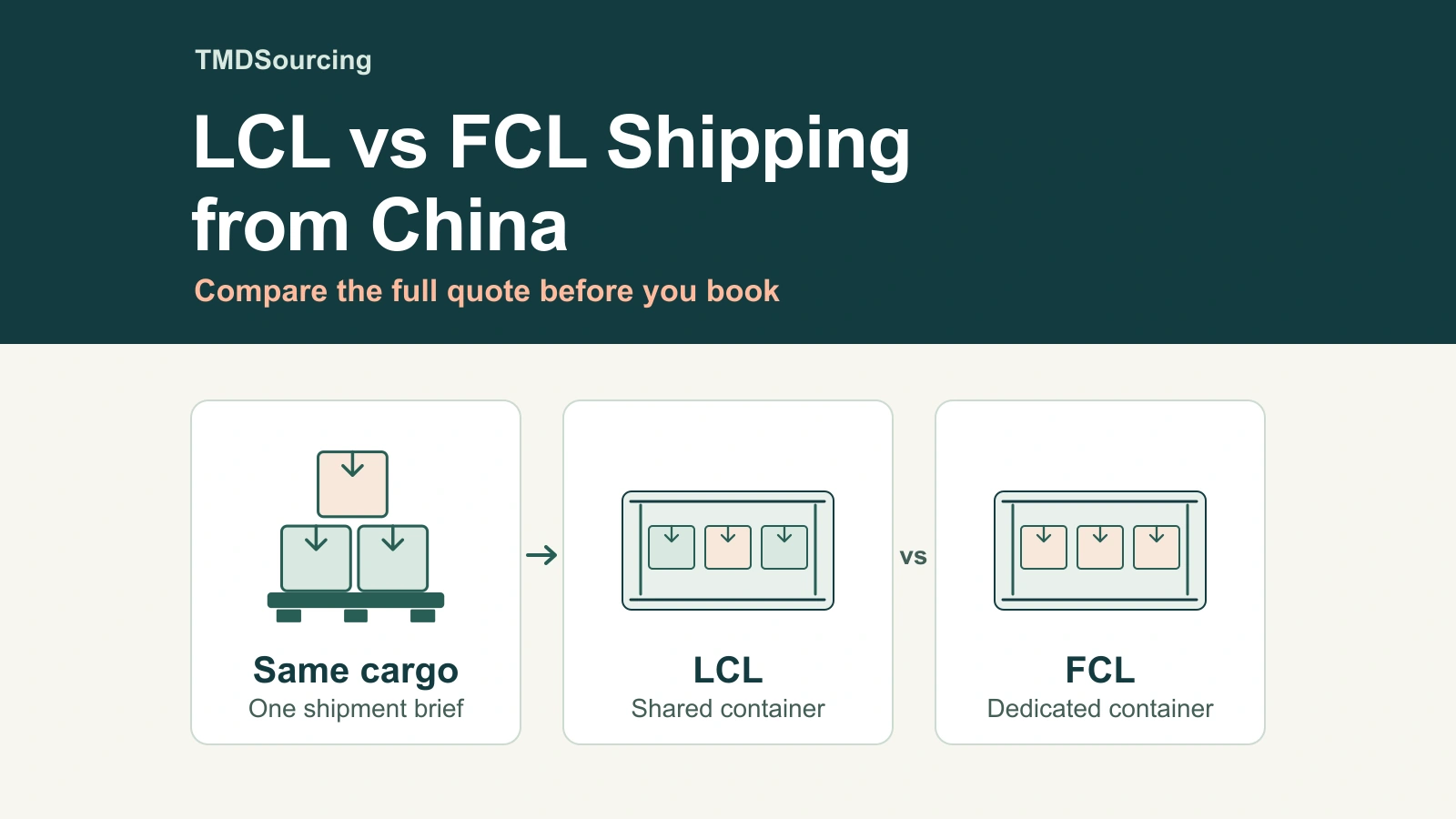
LCL shipping shares a container with other cargo. FCL shipping reserves a container for your shipment. To choose between them, ask for two quotes using the same packed cargo, pickup point and delivery endpoint. Compare the charges you will actually pay, the date you can receive the goods and the equipment your warehouse can accept. A warehouse that only receives pallets from a local truck can change which option costs less even when the shipment and the two ocean rates stay the same.
What Is the Difference Between LCL and FCL?
LCL means less than container load. Your freight is usually received at a container freight station, or CFS, then consolidated with other shipments. At destination, a CFS or handling facility separates the shipments for collection or delivery. Ask where your freight becomes available for pickup and when the destination agent expects to release it.
FCL means full container load. You book the use of a container and can ship it partly loaded if the cargo can be secured and the carrier accepts the load plan. The container can travel to a receiving facility for unloading, or go to a transload facility for delivery on a local truck.
Swipe to see all columns.
| What to compare | LCL | FCL |
|---|---|---|
| Container space | Shared with other shipments | Container booked for your shipment |
| Main freight charge | Often based on chargeable weight or measurement | Typically quoted per container of a specified type |
| Handling points | Receiving, consolidation and deconsolidation | Stuffing, terminal handoffs and container unloading |
| Final delivery | Cartons or pallets after deconsolidation | Container delivery or transload to a local truck |
CFS and CY describe handoff points. A CFS handles consolidation or deconsolidation. A container yard, or CY, handles container handoffs. Check where your forwarder's service starts and ends. Maersk guide to CFS and CY
How Are LCL and FCL Quotes Calculated?
Calculate volume from the final outside dimensions of each shipping unit, including pallets and overhang. Multiply length × width × height in metres by the number of identical units. Add the volumes of different size groups. Record the gross weight, including packaging, alongside each group. If repacking changes the number of cartons or pallets, use the revised measurements for both quotes.
A common LCL ocean freight basis is weight or measure, shown as W/M. Under a quote that equates 1 CBM to 1 metric tonne for rating, the higher numeric value determines the chargeable units. For example, 5 CBM at a gross weight of 6,000 kg would rate as 6 W/M units under that convention, before any minimum or rounding rule. Ask how the forwarder handles remeasurement, minimum billing and non-stackable cargo. Origin handling, destination handling and inland trucking can each have their own rating basis. DHL guide to LCL cost drivers
For FCL, compare the quoted container size and equipment. A container's nominal volume describes its capacity. The usable load depends on the door opening, interior dimensions, payload, pallet layout and any applicable trucking limits. Ask the forwarder to confirm a load plan for your packed units, including clearance for loading and securing the goods. Hapag-Lloyd 20-foot standard container specifications
How to Compare LCL and FCL Quotes on the Same Basis
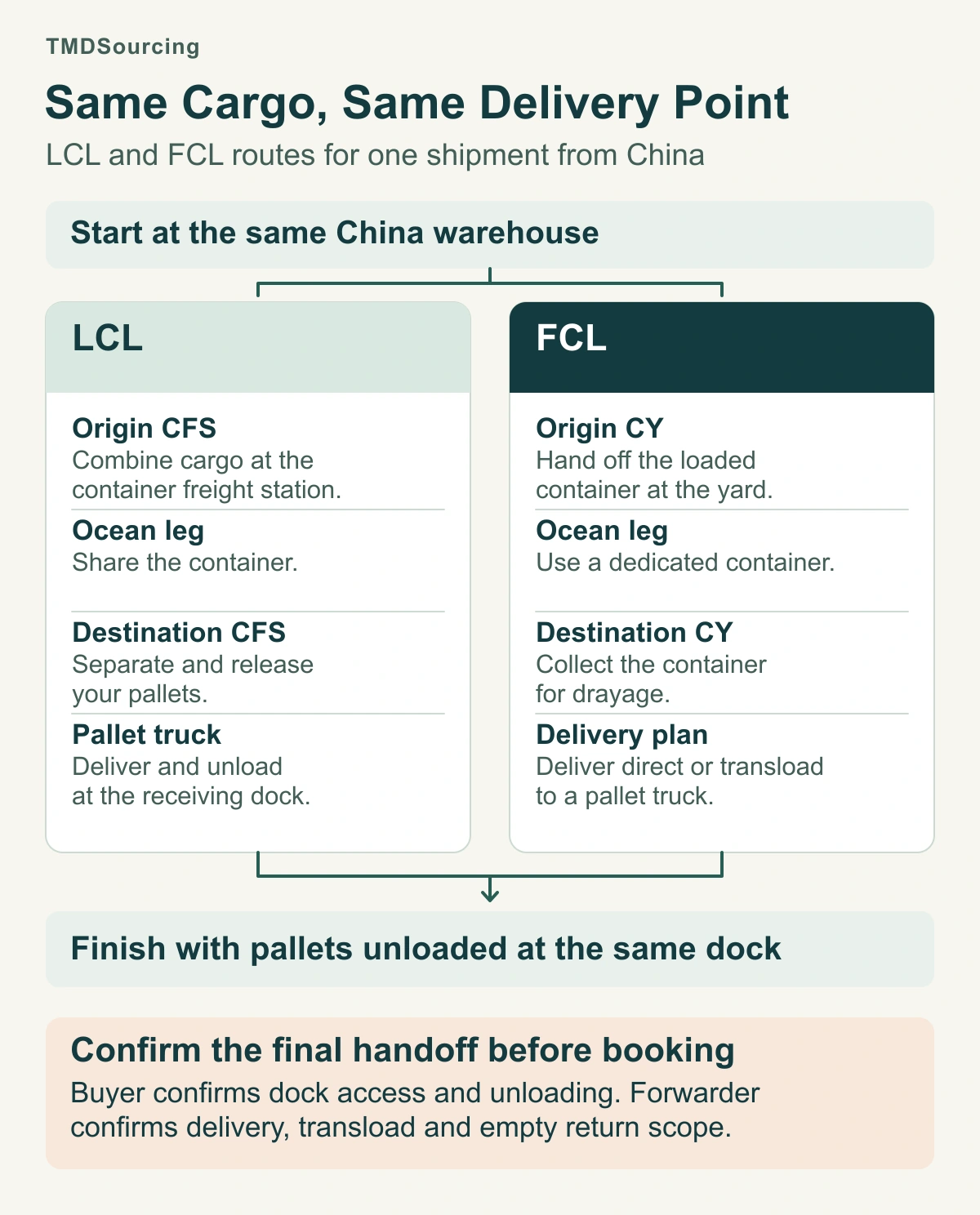
Choose a start point and a delivery endpoint that both providers can quote. A useful comparison might run from a named consolidation warehouse in China to pallets unloaded at a named receiving dock. Give both providers the same cargo-ready date and packed measurements. Confirm the currency, validity period and named handoff points. Ask each provider which party invoices the buyer for each charge.
Break the quote into four stages.
- Origin. Confirm pickup or warehouse handover, receiving, export documentation, consolidation or container stuffing, and transfer to the departure terminal.
- Ocean freight. Confirm the W/M basis or container type, the included surcharges, and any known charges billed separately.
- Destination handling and release. For LCL, confirm CFS handling, deconsolidation, release charges and the local billing agent. For FCL, check terminal and release charges. Agree separately how customs clearance, duties and taxes will be handled.
- Final delivery. Confirm the delivery equipment, appointment, unloading responsibility and any empty-container return. Ask the receiver whether it can accept an ocean container on a chassis or needs a local truck with pallets.
Mark each line as included in a named package, separately quoted, excluded, pending, conditional or not applicable. Count each package once. If a required delivery charge is pending, show a known subtotal and get written confirmation before using it to book. Record storage, waiting time, detention and demurrage with their triggers, free time and rates. Maersk terms for detention and demurrage
Confirm the Incoterm, named place and version in the purchase agreement. Use those details to identify expenses already covered by the supplier, then verify the forwarder's scope separately. ICC guide to delivery and the named place · EXW vs FOB for China purchases
Worked Example: When a Pallet-Only Warehouse Changes the Decision
A buyer has 10 pallets of general cargo ready at a consolidation warehouse in Ningbo. Each pallet measures 1.00 × 1.00 × 1.50 metres including the base, with no overhang. The shipment totals 15.0 CBM and 3,200 kg gross. The destination is one receiving dock in Ontario, California, with the pallets unloaded at the dock. The same packed cargo, cargo-ready date and delivery point apply throughout. Assume the forwarder has confirmed a single-layer load plan for the ten pallets in the 20-foot container and that all quotes are valid on the day of comparison.
The figures below are invented for the example and shown in US dollars. Under the example LCL ocean quote, 15.0 CBM and 3.2 metric tonnes give 15 chargeable W/M units. At $64 per unit, the ocean leg is $960. The example 20-foot FCL ocean leg is $1,260.
Swipe to see all columns.
| Cost in USD | LCL to receiving dock | FCL direct, provisional | FCL with transload |
|---|---|---|---|
| Origin handling and transfer | $300 | $420 | $420 |
| Ocean freight | $960 | $1,260 | $1,260 |
| Destination handling and release | $850 | $210 | $210 |
| Delivery and unloading | $510 | $470 drayage and empty return + $180 unloading | $950 transload and delivery package |
| Known transport subtotal | $2,620 | $2,540 | $2,840 |
The LCL ocean leg is $300 lower. Adding both ends of the journey makes FCL direct delivery $80 lower, provided the warehouse can receive the container. The buyer checks with the receiver, which confirms it only accepts palletized freight from a local truck. That rules out direct container delivery.
The forwarder issues a revised FCL quote covering drayage from the terminal to the transload facility, unloading and transfer to a local truck, empty return, and delivery with unloading at the receiving dock. Its $950 package replaces the $470 and $180 lines. The $210 terminal and release charge remains because the package excludes it. The revised FCL subtotal is $2,840, so LCL is $220 lower among the two feasible options on the stated transport scope. Maersk explanation of transloading
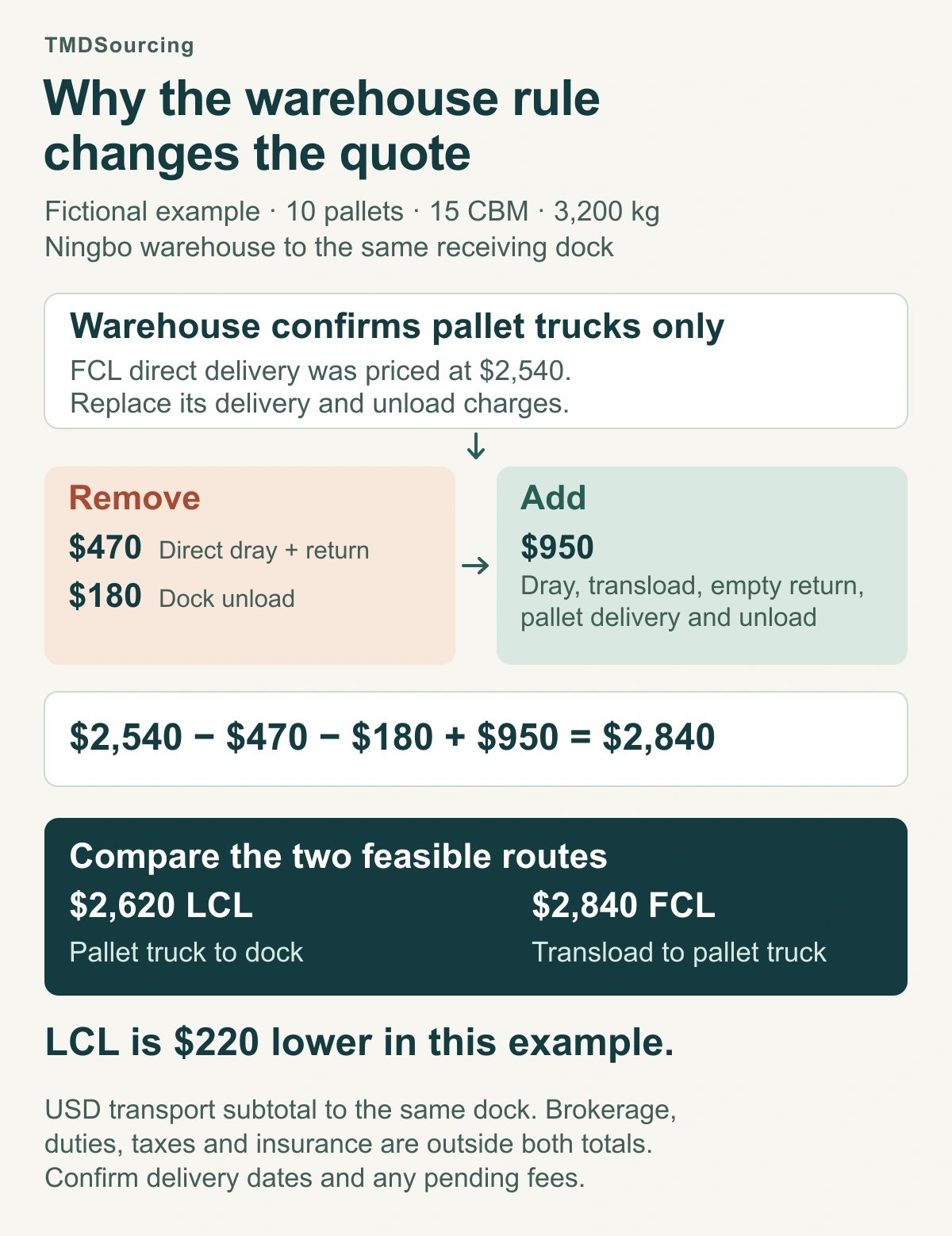
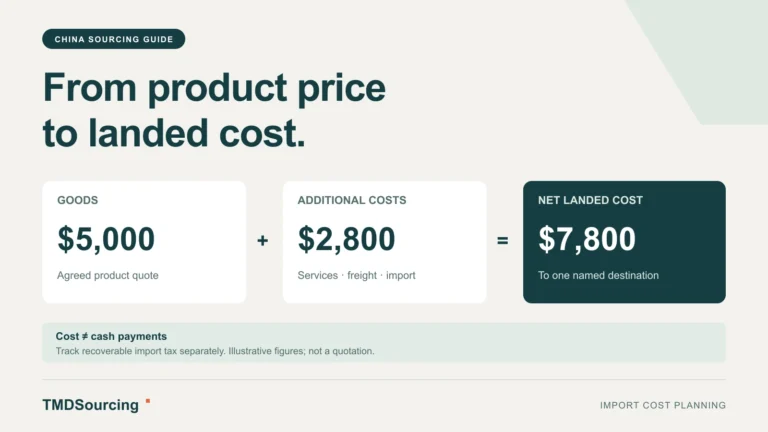
Both options use the same treatment of export documentation. Import brokerage, duties, taxes and insurance are separate from the example subtotals. Before booking, the buyer checks the delivery appointment and asks each provider to identify any fees payable to a local agent or triggered by waiting, storage or late pickup. Use the landed cost guide to budget the rest of the import.
When Is FCL Worth Quoting, and When Should You Requote?
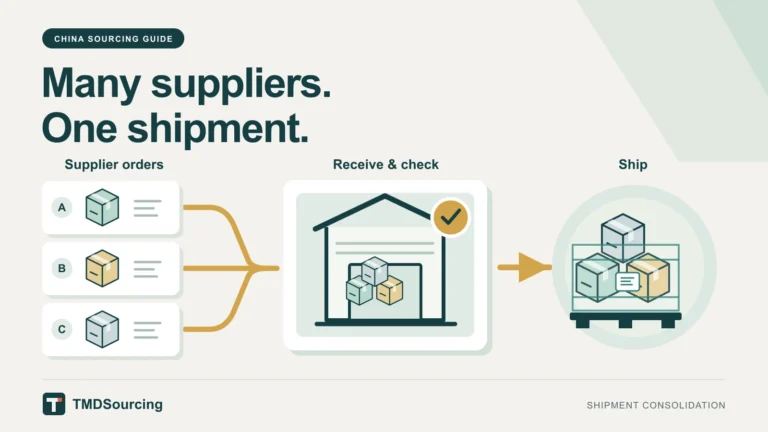
Ask for both options when the cargo is dense, the destination charges are material, or you have enough freight that a container quote could be competitive. FCL is also worth checking when you want fewer cargo transfers, need a specific loading arrangement or have stock arriving for a tight delivery window. For goods from several suppliers, settle the consolidation plan and measure the finished shipment before comparing the outbound modes. Consolidating shipments from China
The cost crossover depends on the lane, cargo, service and receiving conditions. Two shipments of the same volume can lead to different decisions. Maersk on comparing LCL and FCL costs
Compare the time from cargo ready to delivery at the receiving dock. Ask for the origin cutoff, sailing and any transshipment, estimated arrival, release or availability date and the earliest delivery appointment. Allow for clearance and for LCL deconsolidation or FCL container pickup. Confirm the empty return deadline separately if you use FCL.
Request a revised quote if the warehouse changes its receiving requirements, the cargo is repacked or remeasured, a pallet loses its stackable status, or the cargo-ready date moves past the quote's validity or service cutoff. Send the updated packing list and record which quote version the forwarder confirmed. Give the receiving team the final unloading and appointment instructions before the cargo departs. Shipping marks and carton identification
Copyable LCL vs FCL Quote Request
Copy these details into one request so the same shipment goes to both pricing teams.
- Cargo and route. Product or commodity, China pickup address or warehouse, destination address and postcode, and named delivery point.
- Packed shipment. Carton or pallet count, outside dimensions by size group, gross weight, stackability, and any special handling or cargo restrictions.
- Timing. Cargo-ready date and requested delivery date or receiving window.
- Receiving. Pallet or container acceptance, dock or forklift access, appointment rules and unloading responsibility.
- Quote response. Please quote LCL and the smallest feasible FCL equipment on this same scope. Include currency, quote validity, schedule and handoff points. Itemize origin, ocean, destination and final delivery. Identify exclusions, pending fees and charges billed by another party.
Swipe to see all columns.
| Charge or milestone | LCL amount or date | FCL amount or date | Scope, status and payer |
|---|---|---|---|
| Origin handling and export documents | |||
| Ocean freight and surcharges | |||
| Destination handling and release | |||
| Delivery, unloading and empty return if applicable | |||
| Conditional charges and free time | |||
| Earliest delivery and quote expiry |
Frequently Asked Questions
Is LCL cheaper than FCL?
LCL can cost less when you need a small share of container space. The result depends on chargeable units, local fees and the cost to deliver the freight to your receiver. Get both quotes when the numbers are close or the delivery requirements are unusual.
Can I book FCL with a partly loaded container?
Yes. Confirm the equipment, payload and load plan with the forwarder. A partly loaded container still requires secure stowage, and the quote generally covers use of that container.
Why does LCL have destination charges?
The shared container is unloaded and individual shipments are separated and released. Local handling, storage or delivery charges depend on the scope and billing terms. Ask for the destination agent's itemized amounts and confirm which are already included.
Who unloads and returns the container on FCL delivery?
The delivery agreement determines who unloads and who arranges empty return. Ask for the delivery method, the party responsible at each handoff, the return location and deadline, and any charges for extra time.
Compare Your Shipping Options
Share your product, China origin, destination postcode, packed dimensions, gross weight and cargo-ready date. If you have quotes or warehouse receiving instructions, include them. TMDSourcing can help compare the scope and coordinate quotes through its door-to-door shipping service.